Borja García-Lorenzo, a health economist and principal investigator at the Value-Based Healthcare Research Group, took part in the panel discussion on high-impact medicines, where participants debated how to measure value and translate it into funding and procurement.
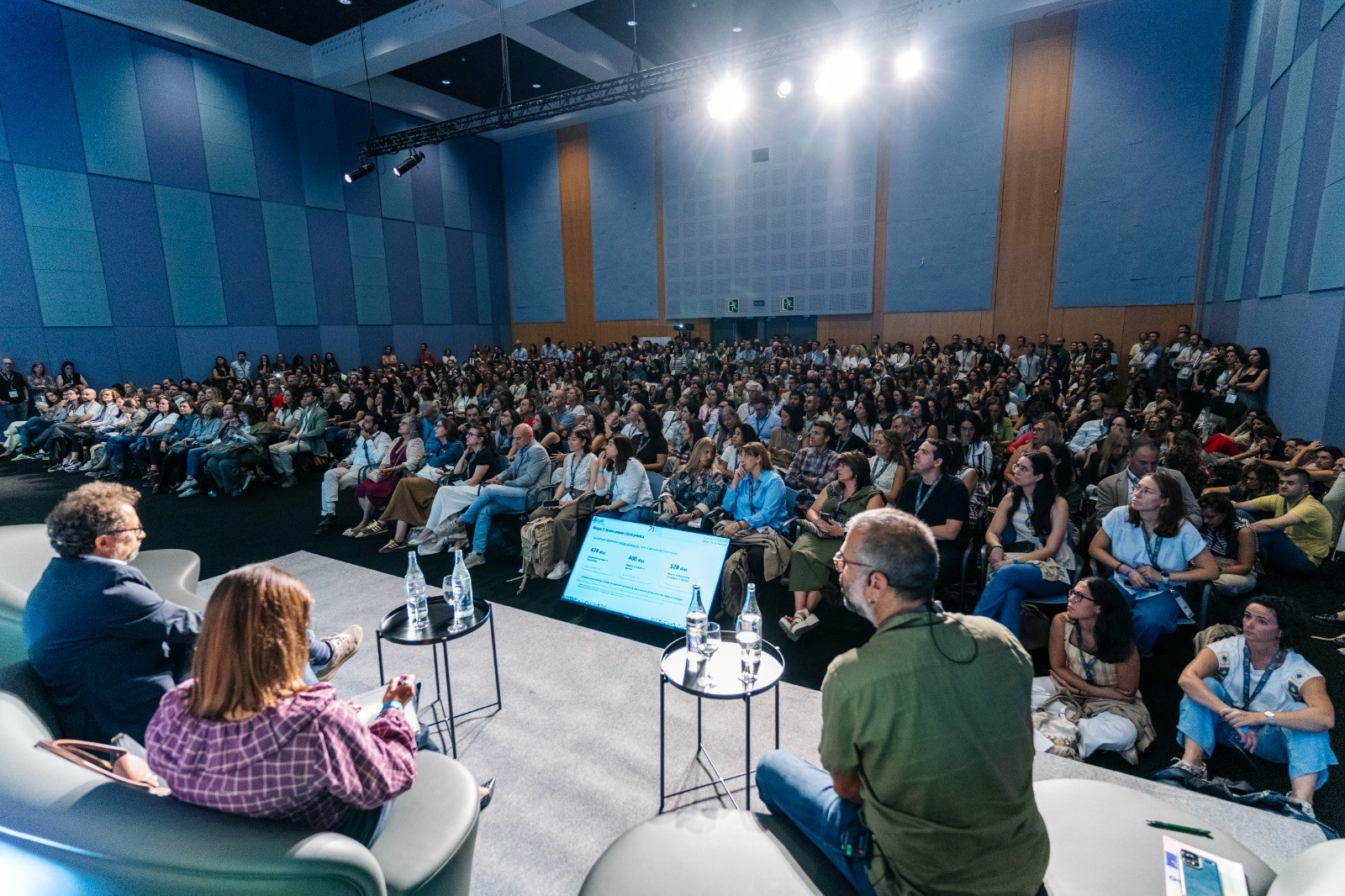 The Biosistemak Institute took part in the 71st National Congress of the Spanish Society of Hospital Pharmacy (SEFH), held in Gran Canaria. Borja García-Lorenzo took part in the panel discussion entitled ‘Management of medicines with high economic and health impact’, which focused on value, and contributed his perspective as a health economist and principal investigator in Value-Based Healthcare (ASBV). The panel discussed the challenges of incorporating value into funding decisions, measuring the outcomes achieved through treatments, and reflecting these in the financial agreements that hospitals must subsequently implement. Also taking part were Laura Vallejo Torres, Professor of Health Economics at the University of Las Palmas de Gran Canaria and a member of the Advisory Committee on the Funding of Pharmaceutical Services, who analyzed the link between evaluations and funding decisions, and Luis Márquez Llabrés, Director of Management at the Gran Canaria Insular University Maternal and Child Health Complex, who outlined the challenges of procuring medicines from a hospital management perspective.
Measuring value beyond QALYs
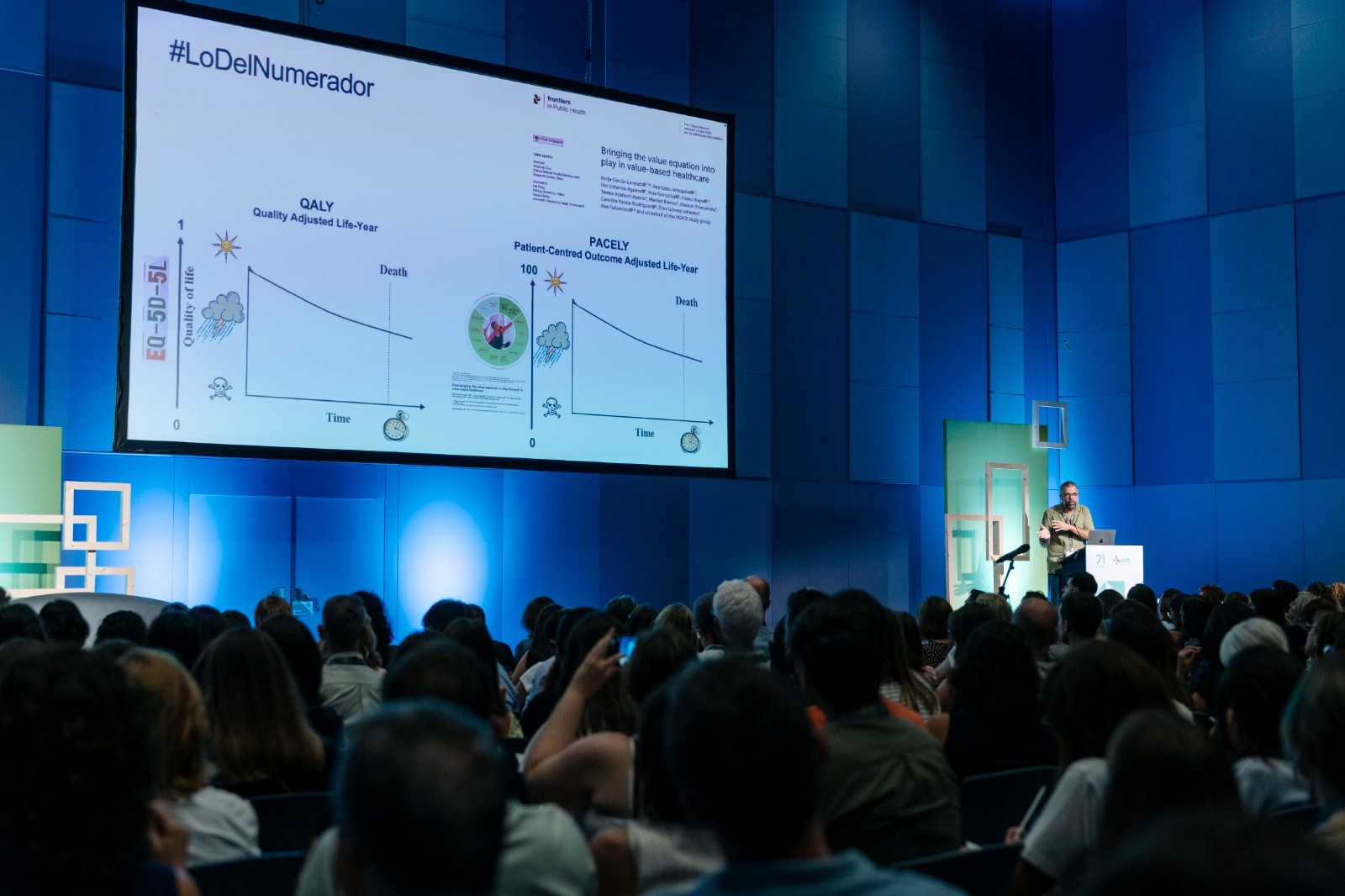
During the panel discussion, participants shared experiences and insights on the usefulness of traditional economic evaluation and how the value of a medicine cannot be reduced to quality-adjusted life years. Biosistemak, represented by García-Lorenzo, presented the ASBV group’s experience with patient-reported outcomes (PROMs) and patient experience measures (PREMs), as well as with composite indicators that detect differences not captured by generic quality-of-life measures. One outcome of this line of research is the proposal for PACELY (patient-centred outcome-adjusted life years), a metric recently published by the group in *Frontiers in Public Health* that combines a composite outcome indicator with survival, in a similar way to QALYs, and which enables assessments in terms of value. The group is now moving forward with the project “Unravelling the value equation: from theory to practice (VALEC)”, coordinated by the institute and funded by the Basque Government’s Department of Health, which also incorporates patient-reported experience measures (PREMs) into the composite outcome indicator.
In the debate on cost-effectiveness thresholds, he recalled that the estimation work carried out alongside Professor Vallejo arose from a health technology assessment report funded by the Ministry of Health and revealed that work is underway to quantify other dimensions of value for inclusion in evaluations – an area that Biosistemak is developing within the project “Redefining cost-effectiveness: Integrating Broader Efficiency and Equity Dimensions into Healthcare Funding Decisions (REEF)’, funded by the Ministry of Science, Innovation and Universities, in collaboration with five other institutions.
The panel emphasised that measuring outcomes is not synonymous with measuring value, as the latter involves relating the benefits obtained to the costs and resources employed. In this regard, the need to move towards truly value-based payment models, integrating both outcomes and costs, was highlighted—an area of work being developed by the ASBV group. Likewise, the challenges still to be addressed were highlighted, such as the availability of detailed information on costs per patient, traceability throughout the care process, and the interoperability of information systems. Finally, it was argued that the measurement of outcomes must have practical application in healthcare management and funding, promoting the systematic implementation of value-based models of care and pharmacy practice.
Valtermed and the burden on hospital pharmacy
The round-table discussion also provided an opportunity to analyze Valtermed’s limitations in supporting pay-for-performance agreements: the availability of structured data, interoperability between platforms and the ability to utilise the recorded information. The focus was on the administrative burden placed on hospital pharmacists, who are required to undertake a significant proportion of the data recording, and it was emphasised that implementing value measurement systems requires specific resources and organisational structures to ensure that new obligations are not passed on to professionals who already perform other clinical duties. This concern was shared by all participants at the round table.
Through this participation, Biosistemak reaffirms its commitment to value-based healthcare that goes beyond merely measuring outcomes but translates into more efficient funding, management and procurement decisions centred on what really matters to patients.
The presentation was covered by Diario Farma in the article “Measuring the value of medicines has yet to be reflected in their funding and procurement”.