Biosistemak publishes it 2026-2030 Strategic Plan
The document sets out the Institute’s roadmap for the next five years and reinforces its commitment to research focused on impact and the public.
Biosistemak has published its new Strategic Plan 2026–2030, a key tool for consolidating its position as a leading institute in applied research into health systems and services. The document sets out the priorities that will guide the Institute’s activities over the next five years, with the aim of strengthening its scientific, social and economic impact and helping to address the main challenges facing today’s health systems.
Research areas aligned with the system’s needs
The Plan, drawn up under the coordination of the Institute’s scientific director, Ane Fullaondo, and the result of an extensive process of strategic reflection, was approved on 16 July 2026 by the Extraordinary General Assembly, the Institute’s sovereign governing and representative body.
Institutional representatives, healthcare professionals, research experts and leaders of leading national and international organisations were involved in its development. These include the Basque Government’s Department of Health, Osakidetza, the University of the Basque Country (EHU), the Ministry of Health, the World Health Organisation (WHO), the Organisation for Economic Co-operation and Development (OECD), the European Observatory on Health Systems and Policies, the International Foundation for Integrated Care (IFIC) and representatives from other leading bodies and centres specialising in health systems research and evaluation.
A response to the major challenges facing health systems
The analysis ca
rried out to draw up the Plan highlights that health systems are facing significant transformations resulting from an ageing population, the rise in chronic diseases, health inequalities, the fragmentation of care, the increase in mental health issues and the need to effectively harness the potential of digitalisation and artificial intelligence.
Against this backdrop, Biosistemak reaffirms its mission to generate and transfer knowledge that contributes to improving the health of the population, the quality of care and the sustainability of the health and social care system. Furthermore, the Plan sets out a vision to consolidate the Institute as an international leader in applied and translational research, recognised for driving the transformation of policies and services through high-quality scientific evidence geared towards decision-making.
As a result of the strategic review process, the Institute has reformulated its research areas to align them with the present and future needs of health systems. These areas encompass the governance and sustainability of health and social care systems; integrated care models and organisational transformation; digital transformation, data science and artificial intelligence in healthcare; the implementation and scalability of innovations; citizen participation and empowerment; and the evaluation of health outcomes and quality of care.
These lines of work will help to strengthen priority areas such as value-based care, the evaluation of public policies, integrated care, the use of health data for research and decision-making, patient and citizen participation, and the measurement of outcomes relevant to the population.
Five pillars to drive transformation
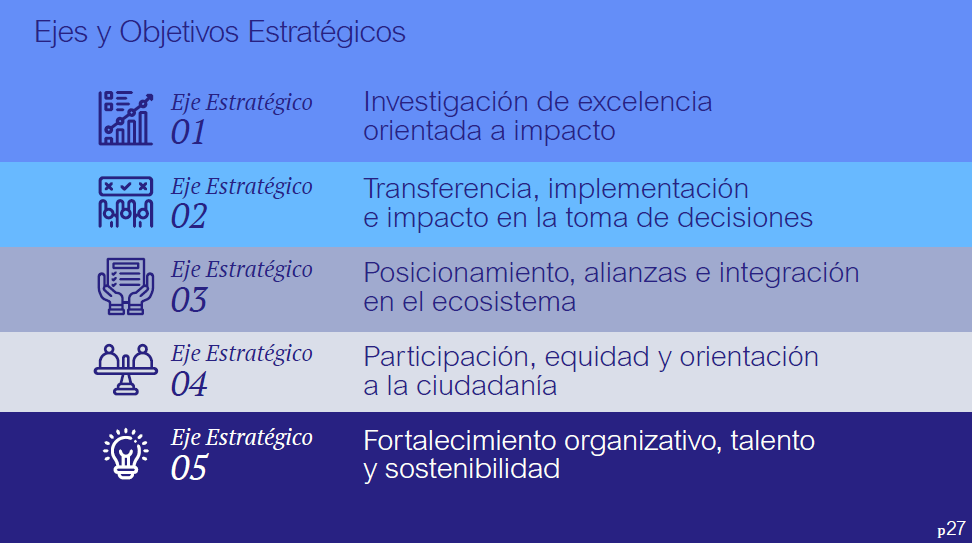
The Strategic Plan is structured around five main pillars. The first focuses on impact-oriented research of excellence, reinforcing scientific quality and alignment with the system’s priorities. The second aims to strengthen knowledge transfer and its application in clinical practice, healthcare management and public policy. The third focuses on institutional positioning, strategic partnerships and integration into the scientific and healthcare ecosystem. The fourth incorporates, across all areas, public participation, equity and the generation of social value. Finally, the fifth pillar is geared towards the for rganisational improvement, talent development and the Institute’s sustainability.
Biosistemak operates on the basis of a collaborative model that brings together research and technical staff linked to the Department of Health, Osakidetza and the University of the Basque Country. In addition, around 300 healthcare professionals and managers from Osakidetza’s healthcare organisations actively participate in research projects led by the Institute, helping to strengthen the link between knowledge generation and the improvement of clinical practice.