We publish an article reviewing the evidence on integrated care within the healthcare system
The study, which forms part of the SESPAS 2026 Report, is the result of a collaboration with the Catalan Health Institute and the Aragonese Institute of Health Sciences.
The journal Gaceta Sanitaria has recently published the scientific article ‘Lessons for more integrated care in the Spanish National Health System’, which reviews the available evidence on integrated care and its contribution to improving healthcare, with a particular focus on the lessons that can be drawn for the Spanish National Health System (SNS).
The article forms part of the 2026 Report by the Spanish Society of Public Health and Health Administration (SESPAS) and is authored by Dolores Verdoy and Ane Fullaondo, from Biosistemak, in collaboration with Daniel G. Abiétar, from the Catalan Health Institute (ICS), and Enrique Bernal-Delgado, from the Aragonese Institute of Health Sciences (IACS). All the authors are also members of the Research Network on Chronicity, Primary Care and Health Promotion (RICAPPS).
Rethinking integrated care based on evidence
Integrated care has established itself as one of the priority approaches in the health policies of many countries. This concept encompasses models that seek more coordinated, person-centred care tailored to the needs of patients, families and communities, overcoming fragmentation between levels of care.
Despite its widespread presence in health discourse, the available evidence on its actual impact is mixed. Building on this observation, the article critically reviews what is currently known about the effects of integrated care, particularly from the perspective of primary care, and what lessons can be drawn for the national health system.
Over a thousand studies analysed
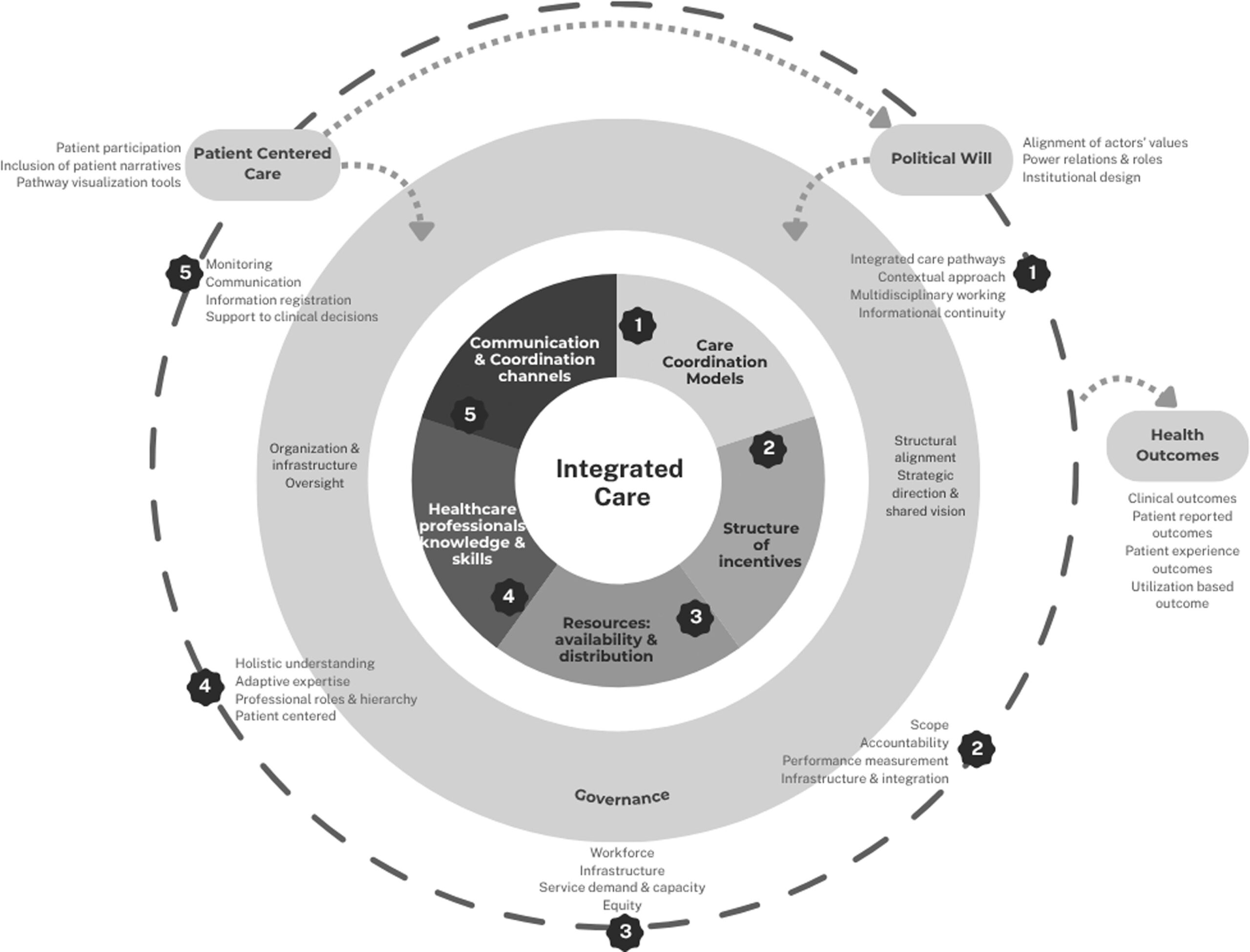
The study presents an exploratory review of 18 scientific reviews, which together encompass more than a thousand previously published studies. The analysis focuses on various health policy instruments aimed at promoting the integration of care:
- Models of coordination between professionals and levels of care
- Incentive systems and funding models
- Distribution and availability of resources
- Capacities and competencies of healthcare professionals
- Use of information and communication technologies
In addition, experiences developed within the context of the Spanish National Health System are reviewed, with the aim of placing the results within a familiar and understandable framework.
Limited and inconsistent evidence
According to the review’s findings, integrated care is in some cases associated with improvements in certain care processes, such as the coordination of services or the experience of those receiving care. However, the available evidence is limited and inconsistent when analysing final health outcomes.
The article highlights that the advances observed are usually linked to broader, sustained approaches over time, and notes that isolated interventions are not usually sufficient to bring about structural changes. It also emphasises the need for more robust and comparable evaluations to better understand what works, in which contexts and under what conditions.