Second meeting to define the citizen participation ecosystem in the Basque Country
The meeting, held on 5 March in Bilbao, focused on training and strengthening the tools available to patient associations.
On 5 March, the Basque Government’s Department of Health held the second meeting in the process of building the future Basque ecosystem for citizen participation in health in the auditorium of the LEDO Building in Bilbao. This monographic meeting, focused on training and strengthening the tools and skills of patient associations, is part of the work itinerary promoted within the framework of Line 22 of the Basque Health Pact, dedicated to Deliberation and Shared Decision-Making.
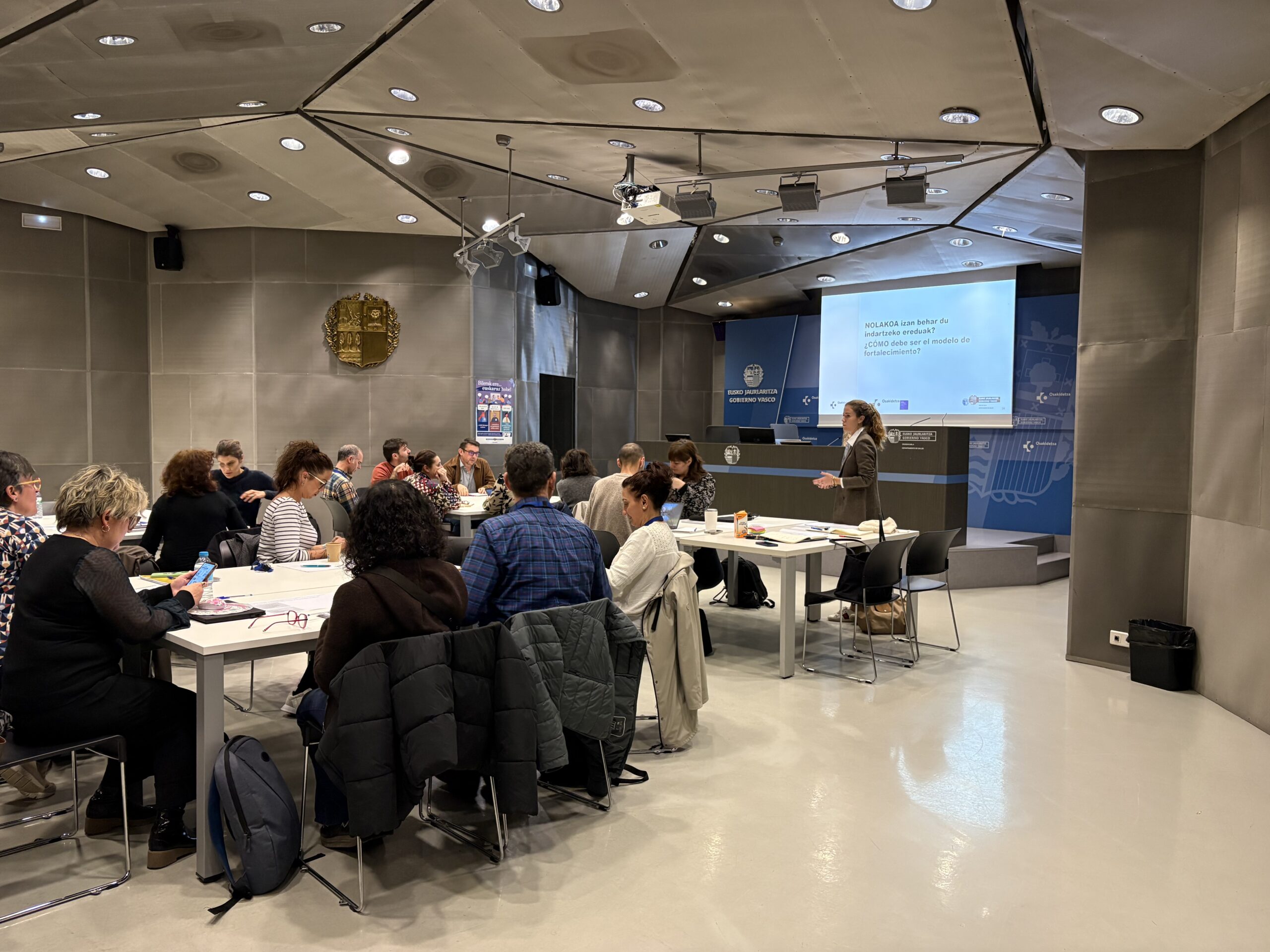
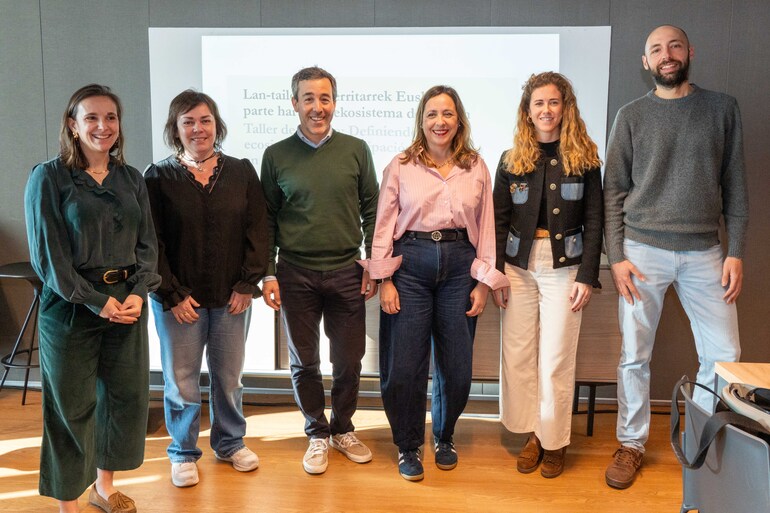
As in previous sessions, Biosistemak accompanied the Department in the methodological design and facilitation of the workshop. The day was led by the director of the Institute, Ane Fullaondo, and the researcher and project manager, Yhasmine Hamu, who guided the collaborative reflection dynamics with patient associations, Osakidetza professionals and technical staff from the Department of Health itself.
A workshop aimed at moving towards concrete proposals
This meeting was a continuation of the workshop held on 23 February, the conclusions of which were presented during the first part of the session. In this presentation, the Biosistemak team highlighted the strategic strengths of the Basque health system, as well as the structural weaknesses that require attention and the essential components for defining an organised, sustainable ecosystem of citizen participation with a real impact in the Basque Country, at the macro, meso (intermediate structures) and micro levels.
From this point onwards, the meeting focused on moving towards concrete proposals that would enable the design of a realistic and sustainable model for training and capacity building for patient associations, one of the priority areas identified in the previous process.
Identification of strategic competencies
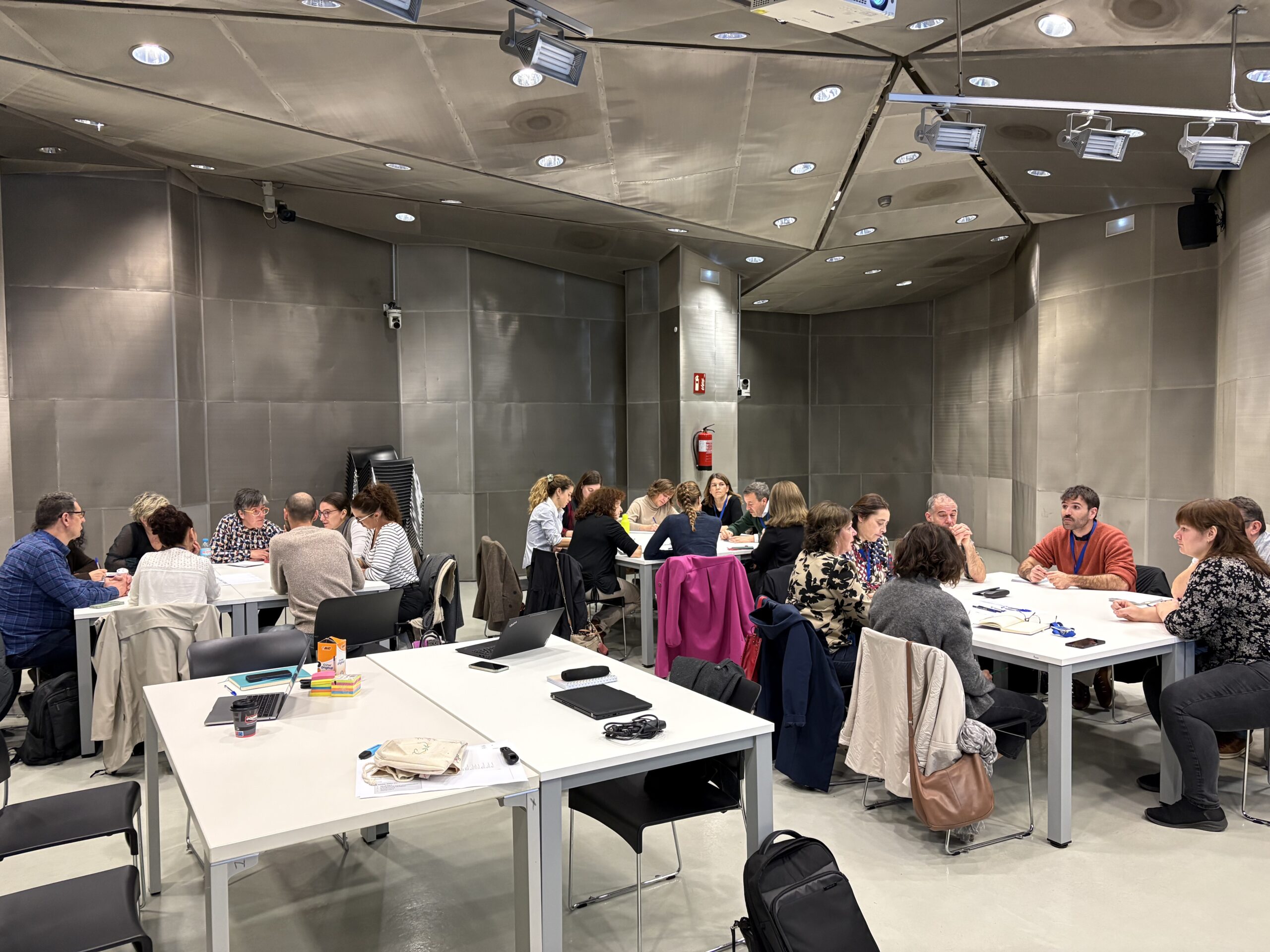
In an initial collaborative workspace, participants analysed which competencies and topics are considered strategic for strengthening the participation of associations within the Basque healthcare system. This reflection was carried out in three thematic tables, dedicated to participation in the healthcare system, organisational strengthening, and networking and community outreach.
Through this exercise, representatives of patient associations and professionals from Osakidetza and the Department of Health were able to agree on the essential capabilities needed to move forward, those that are desirable in a second phase, and those issues that do not require immediate priority. The contributions gathered provide a solid basis for guiding the future strengthening programme.
Designing the ideal training and strengthening model
In a second discussion exercise, the groups worked with a specific template that allowed them to design an “ideal model” for training. The reflection began with an analysis of different formats—from one-off face-to-face training and mentoring between associations to more extensive training itineraries, communities of practice, and self-training digital materials—and allowed them to identify which combinations may be most useful depending on the diversity of the associative fabric.
Subsequently, the structure of the model was discussed, considering options such as a modular system, staggered levels, links to accreditation processes, or territorialised approaches. This work helped to outline a flexible, adaptable, and results-oriented model.
Governance and sustainability: keys to ensuring impact
The final part of the meeting focused on governance and sustainability, an aspect identified as critical to ensuring that participation does not remain a consultative exercise, but translates into real and measurable decisions. In a plenary session, attendees reflected—through questions recorded on post-it notes—on fundamental issues:
Who should lead this process?
What role should Osakidetza play?
How can the sustainability of the model be ensured?
How can we guarantee the return and evaluation of the associations’ contributions?
This space allowed us to gather key proposals and concerns to ensure that the future participation ecosystem is stable, transparent, and effective in the long term.
Next steps in building the ecosystem
The conclusions gathered at this meeting will be incorporated into the development of the Master Plan for Citizen Participation in Health, which is currently being drawn up. The next thematic sessions will take place on 9 March, dedicated to social prescribing, and on 18 March, focusing on the registration of patient associations.
With this second meeting, the Basque Country continues to move towards a more solid, coordinated and sustainable ecosystem of citizen participation, with the collaboration of Biosistemak as a strategic partner in the design, analysis and facilitation of the process.